Grand Green Osaka
A promotional short film to showcase the urban development at Umekita Park
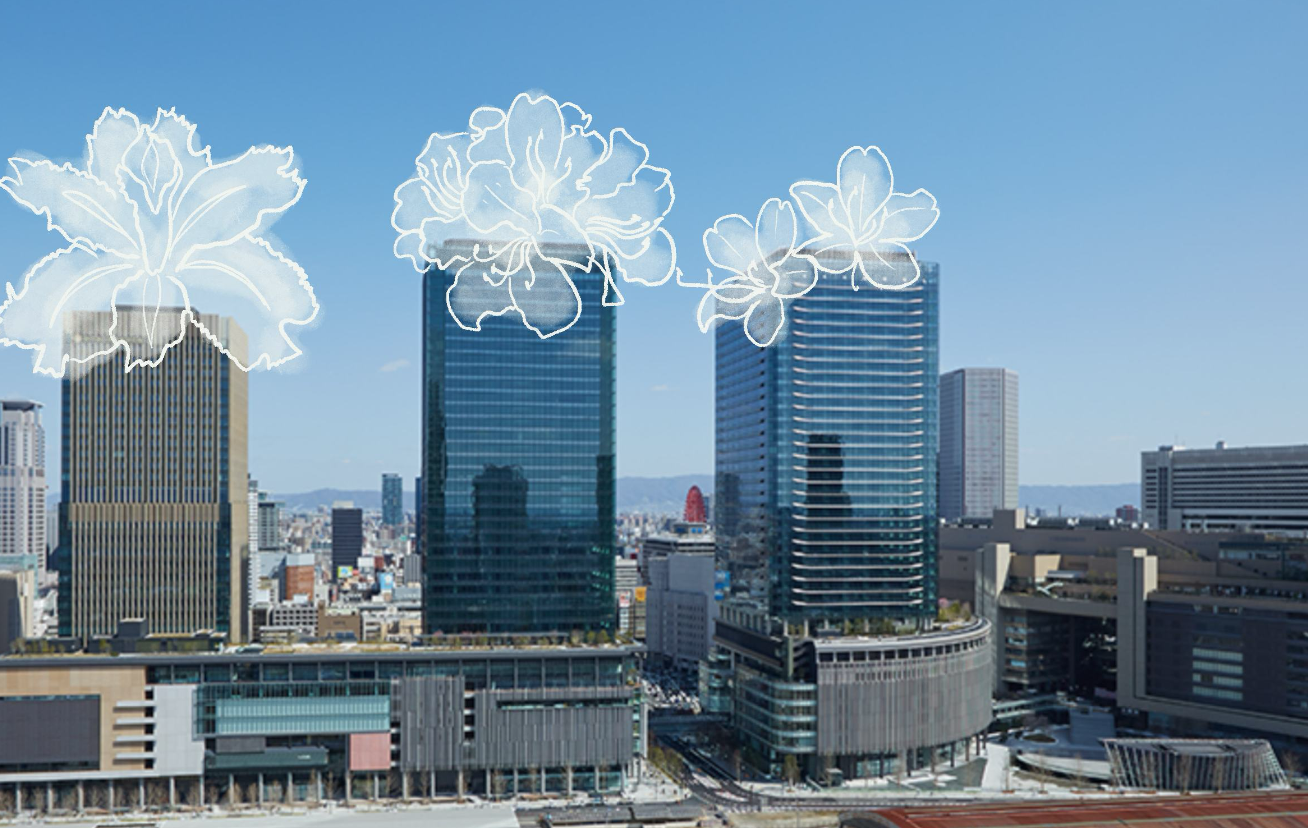
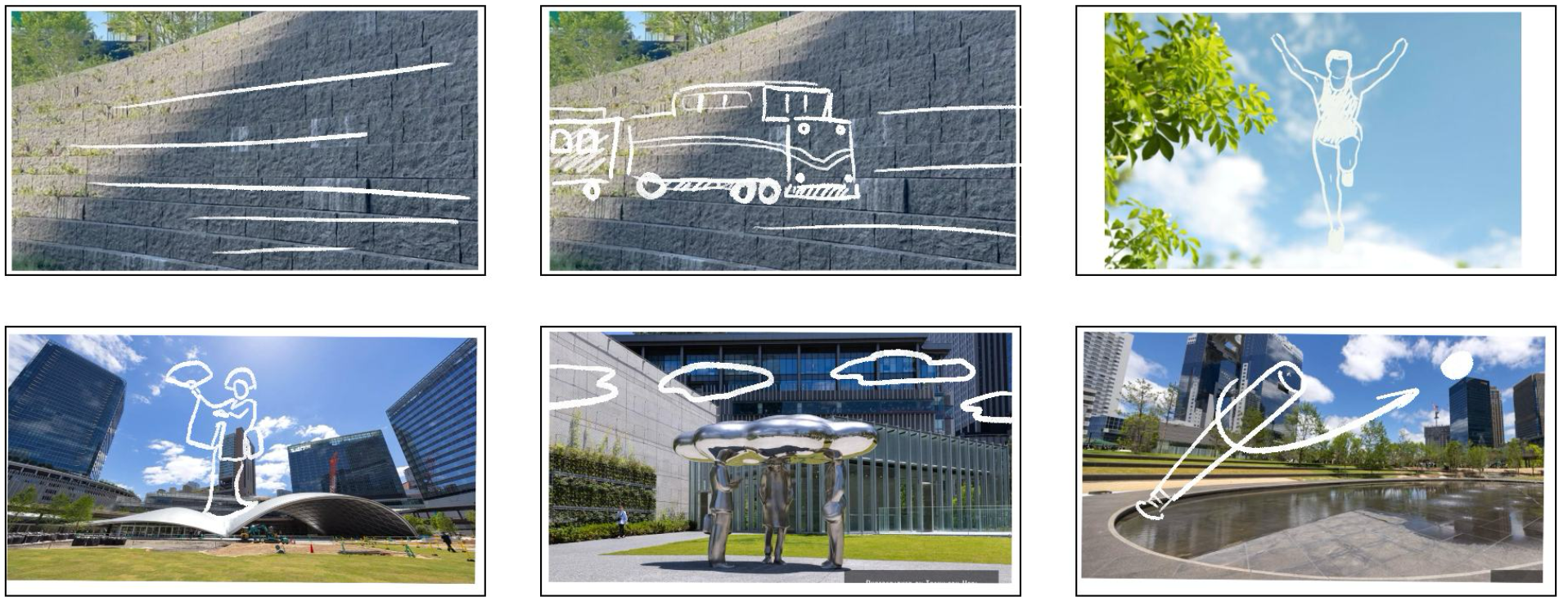
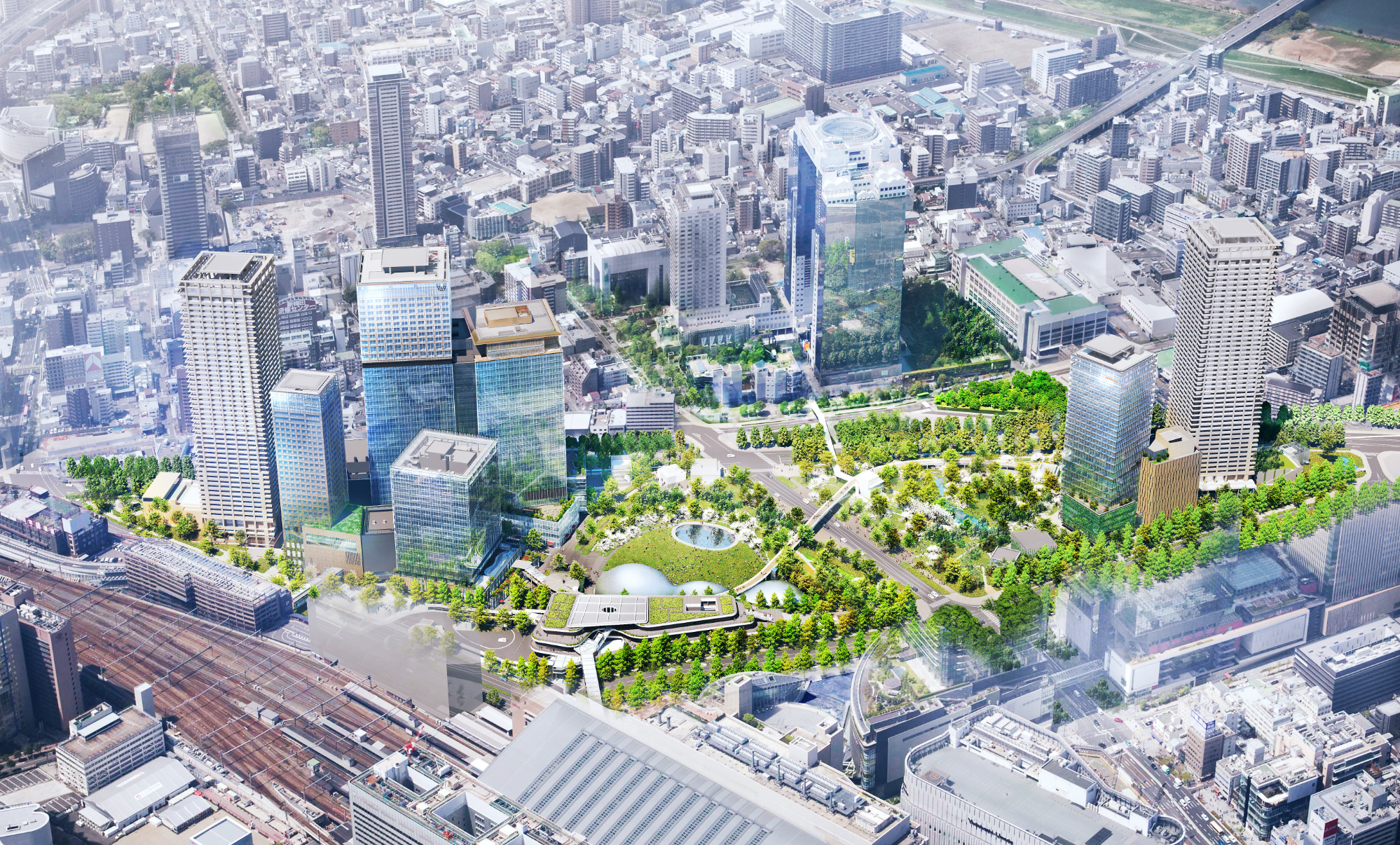
Grand Green Osaka - Midori Life is an animated film created for the opening campaign of Umekita Park, a vast new urban park being built in phases next to the Osaka Central Station. As art director, I developed the concept, wrote the storyline and storyboarded the film, which combines line animation with real architectural imagery. The production, led by Keiichiro Taro and animated by Kyoko Hattori, premiered in Osaka in September 2024.
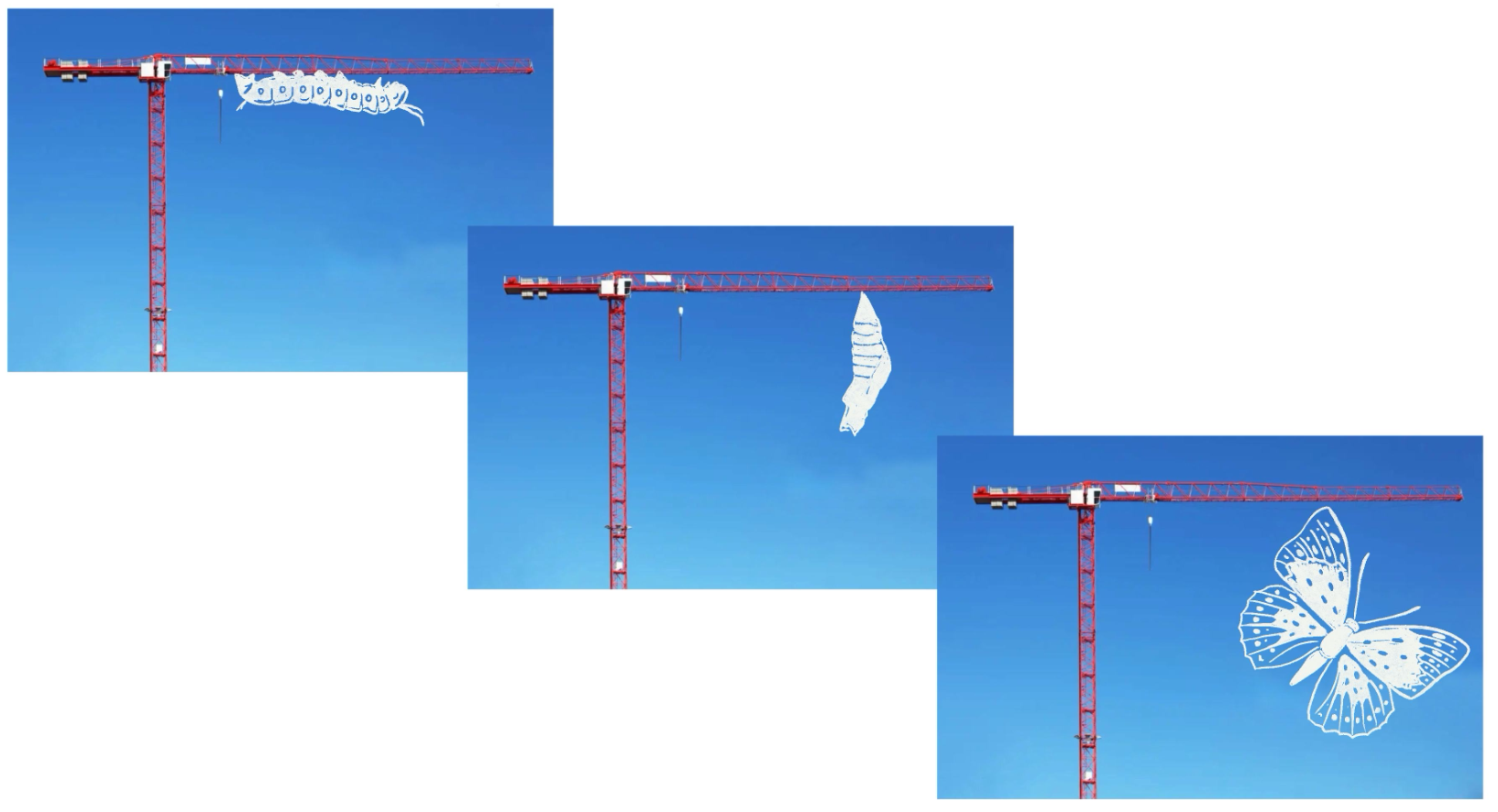
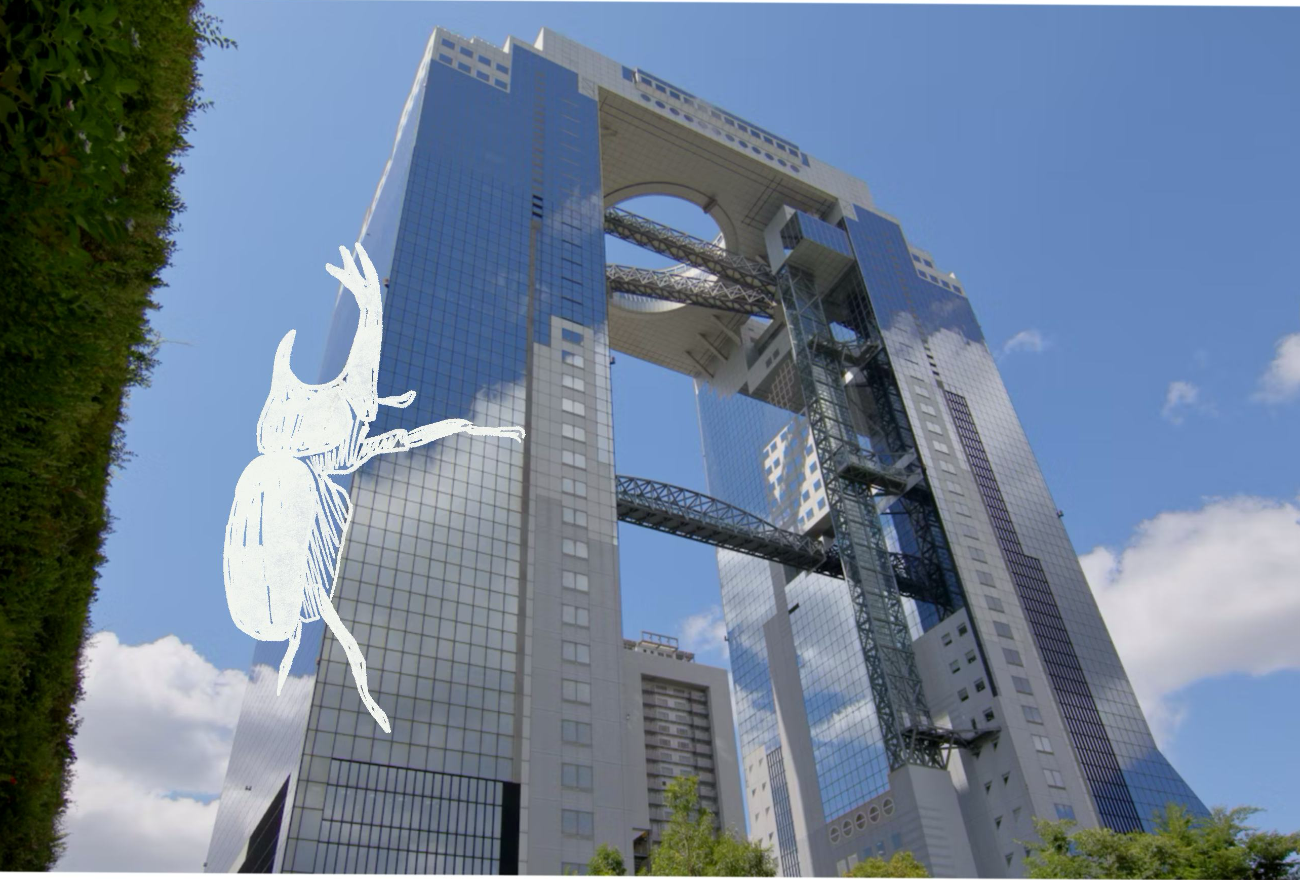
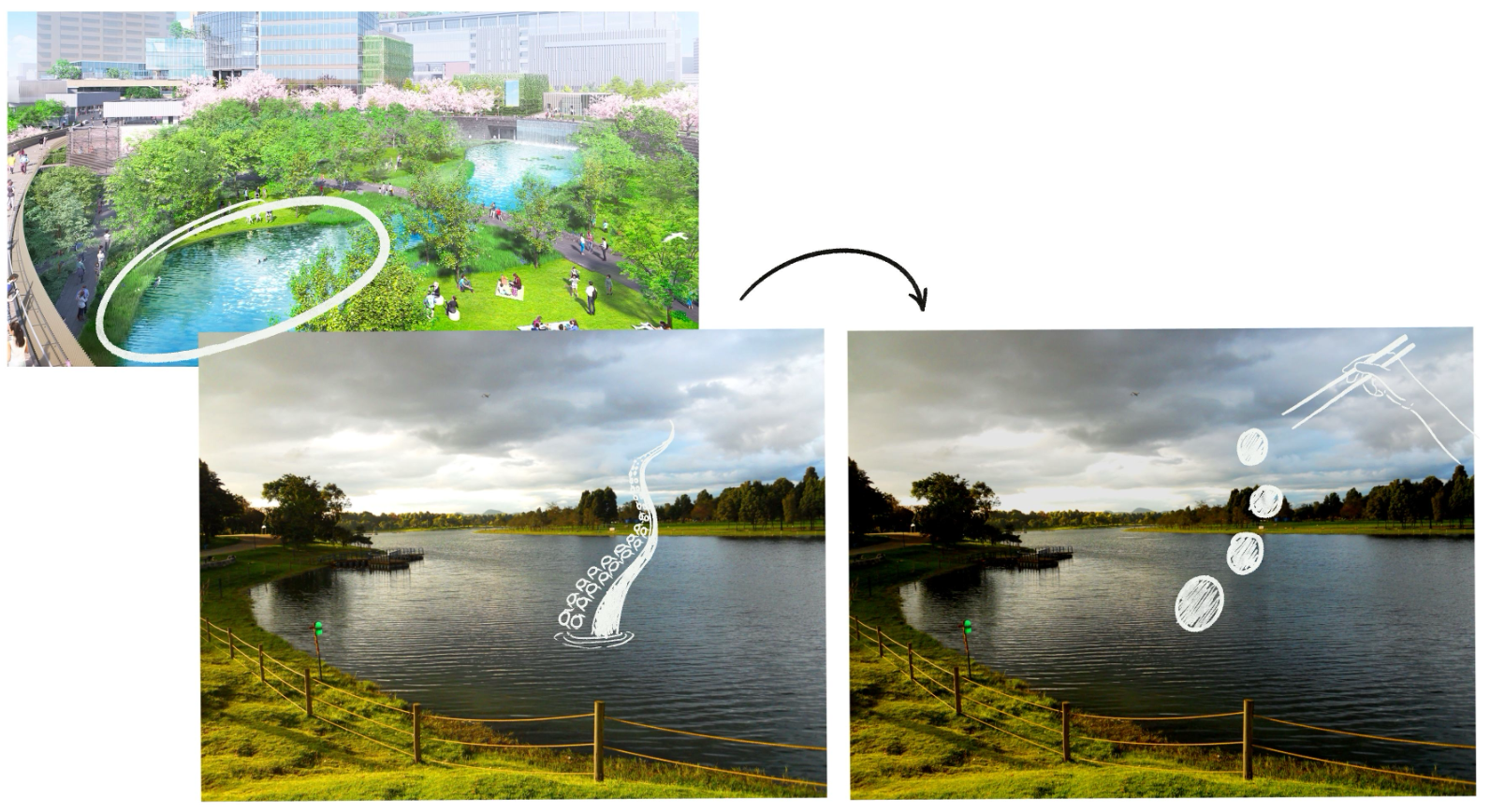
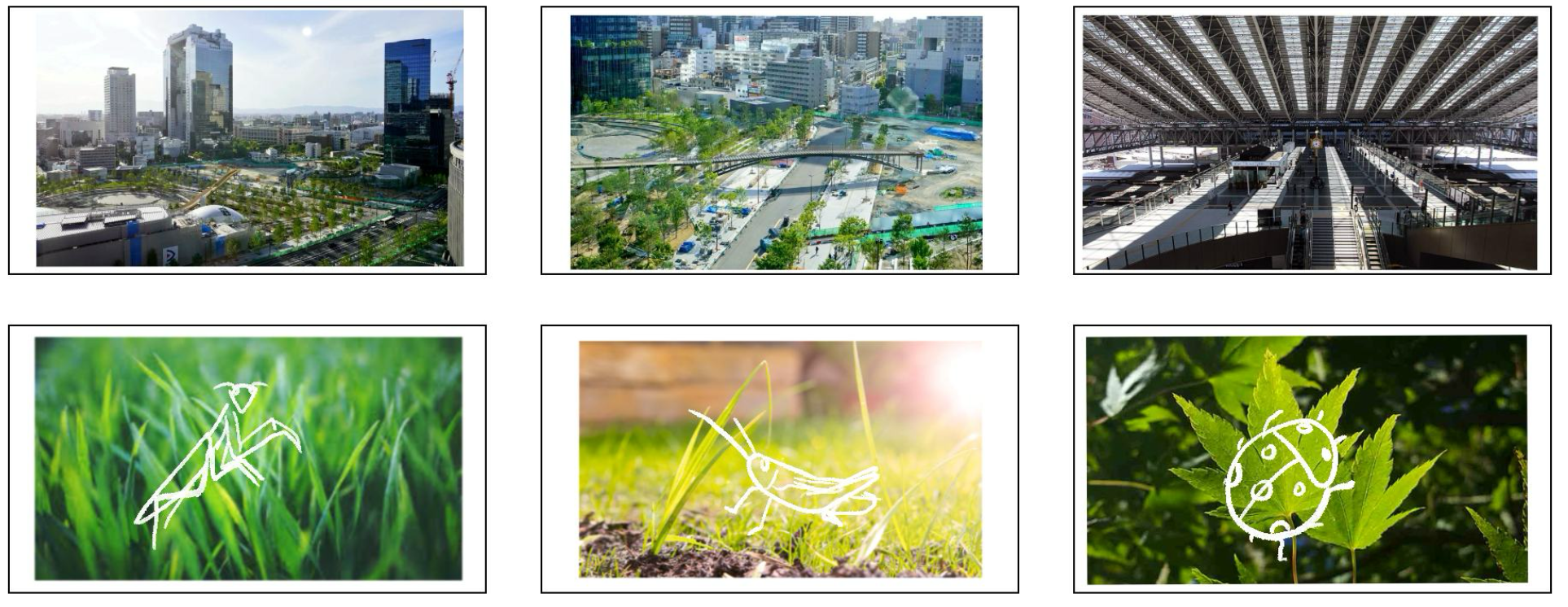
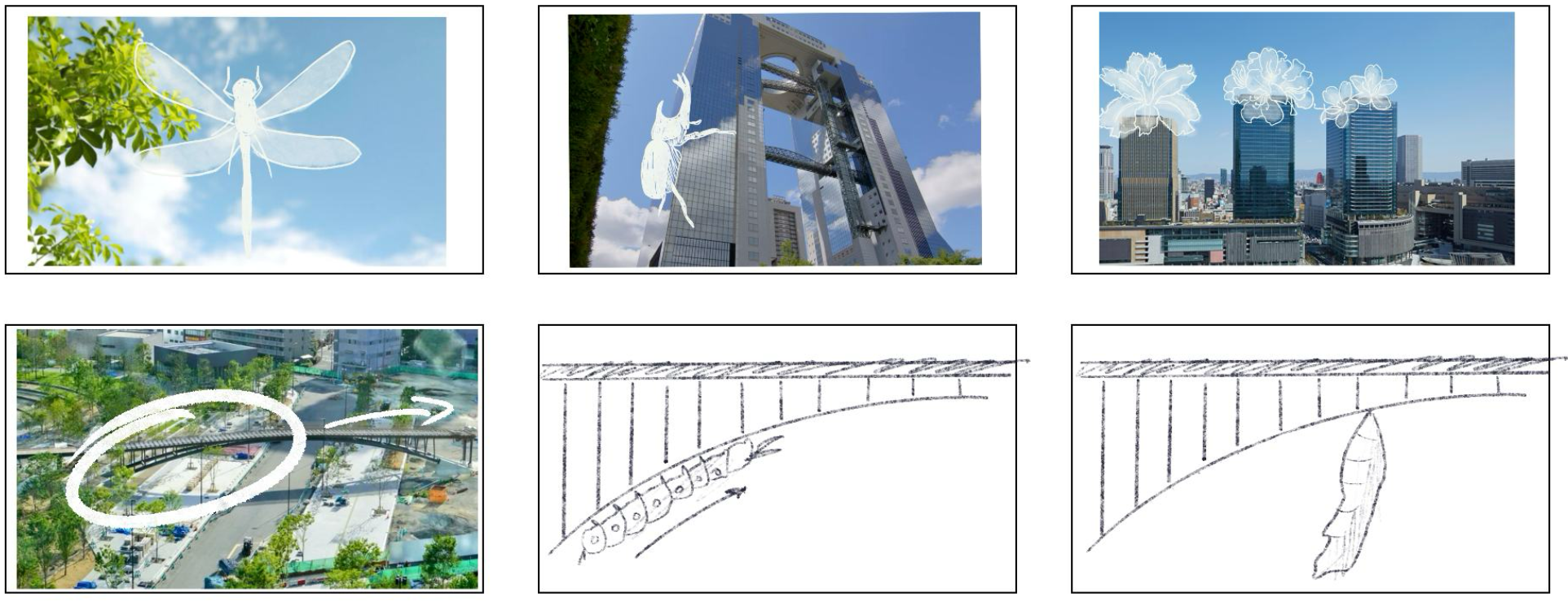
Without a single word, the film follows one day in the park, from morning to sunset. As the hours pass, the park's wildlife gradually transforms into the icons, flavours and traditions of Osaka: insects become landmarks, the local baseball team icons dance in the sky, and an octopus turns into takoyaki. By the end of the day, nature and city share the same landscape.
Creative process
The project began unexpectedly. Keiichiro Taro, an artist and curator working with Nikken Sekkei, the firm behind the park, reached out after coming across some of my previous animations, particularly interested in animation drawn over real architecture.
The brief consisted of capturing the nature of the park and root it in local culture. Along with a guide to the species that live (and will live) in the park, I received material on Osaka's traditions and popular icons. I focused my research on the city rather than on Japan as a whole, looking for references that locals would recognise instantly.
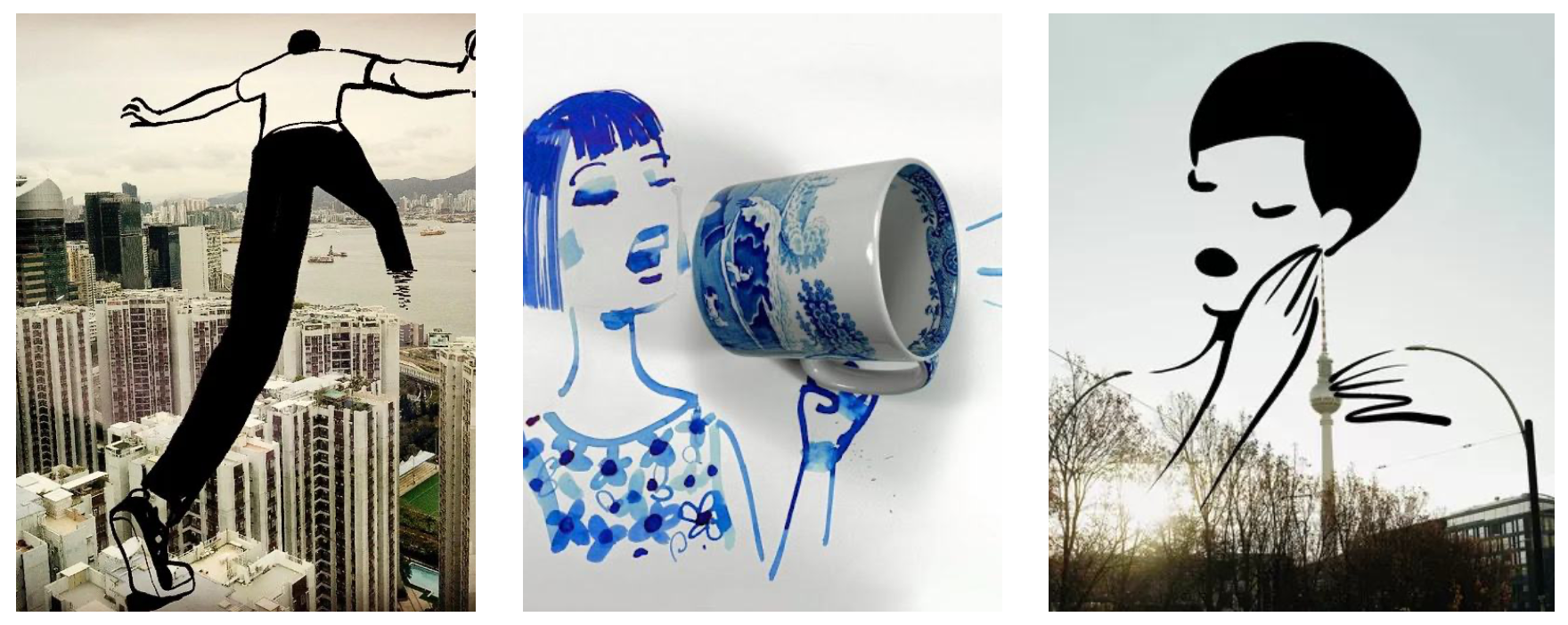
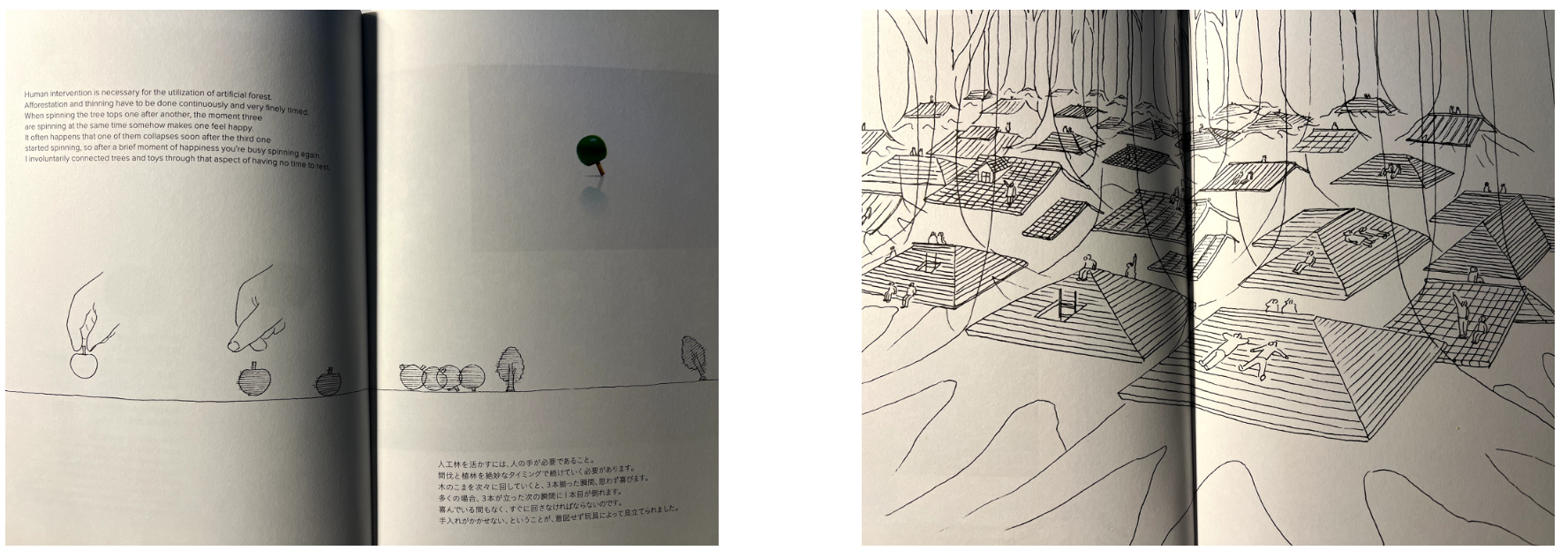
The premise grew out of a set of dualities: old and new, nature and city, big and small, the familiar and what is still to be discovered. The technique already worked in layers, so the story could too, with every scene starting from something real and adding a second reading on top. I proposed a film without voiceover, so the images could speak for themselves. Visually, I drew on my own earlier work and on two artists who play with how one thing can become another: Christoph Niemann’s witty illustrations, and Yasuhiro Suzuki’s Neighborhood Globe book.
From there, I structured the film around the passage of a single day, with the light setting the pace. Morning is calm and natural, the transformations become more playful as the day goes on, and by sunset the future arrives in the form of shinkansen trains. I set all of this out in a concept dossier and then in a full storyboard, which became the blueprint for the final animation.